
Adding stones or gravel to the bottom of a plant pot for a drainage layer is one of the most common pieces of gardening advice people hear when repotting an olive tree. It sounds logical — if olive trees need excellent drainage, surely a layer of rocks at the bottom of the pot must help excess water escape more easily.
But in reality, adding stones or gravel to the bottom of a pot can actually make drainage worse.
Let’s find out what’s going on here.
Why People Add a Drainage Layer to Pots
The idea behind a drainage layer is simple:
- Water moves through the soil
- Excess moisture reaches the gravel
- The roots stay safely above any standing water
Olive trees hate soggy roots, and overwatering will quickly lead to lots of problems. Easily upping the drainage of your olive pot is super appealing.
So I’s easy to see why the advice became so widespread.
But container drainage behaves differently from what most people imagine.

What Actually Happens With a Drainage Layer
Water doesn’t automatically move from fine soil into coarse gravel very easily.
Instead, moisture tends to collect in the finer soil sitting above the stones. This creates something called a perched water table — a saturated layer of soil that stays wetter for longer.
In practical terms, this means:
- The usable soil depth becomes shallower
- The root zone stays wetter
- Oxygen around the roots is reduced
- Risk of root rot increases
- Overwatering becomes easier

Why Olive Trees Are Especially Sensitive
Olive trees evolved in rocky Mediterranean soils where water drains freely and roots are exposed to constant airflow.
Indoors, the biggest danger is usually not underwatering — it’s moisture staying trapped around the roots for too long.
Adding stones to the bottom of the pot doesn’t solve these problems if the soil itself still holds too much moisture.
What Improves Drainage Instead?
The best way to improve drainage is through the soil mix itself, not through a separate layer at the bottom.
A healthy olive tree mix needs to create an open structure for the entire root system,
An open structure means:
- Water can move evenly through the whole pot
- Air can reach the roots
- The soil dries consistently
Our Expert Olive & Mediterranean Soil Mix combines excellent drainage, airy structure, and specialised nutrition to support healthy growth.
A layer of gravel at the bottom of some compost isn’t going to compensate for a good soil mix, and we’ve got the best one.
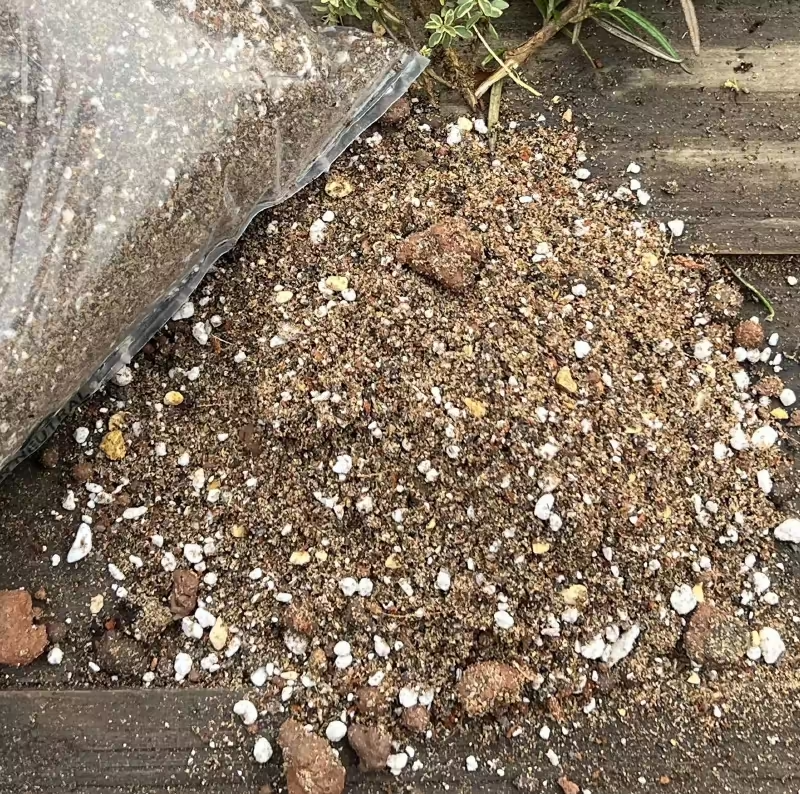
The goal when repotting is not to create a wet layer and a dry layer — it’s to make the entire root zone drain well.
The Real Secret to Healthy Olive Tree Roots
Healthy olive tree roots come from:
- Bright light
- Careful watering
- Airy soil
- Proper drainage holes
- Allowing the soil to dry between waterings
Not from adding rocks to the bottom of the pot.
In fact, once you use a genuinely free-draining soil mix, you usually realise drainage layers were never necessary in the first place.
For olive trees, the best approach is simple:
Make the whole pot drain well, not just the bottom few centimetres.
For some more tips about repotting olive trees, check out my handy explainer. Or if overwatering is a concern, take a look at some of my olive watering tips.



Leave a Reply