
You look at one of your houseplants and notice something spreading across the surface of the soil. It’s white, fluffy and unmistakably mould-like. Not exactly what you were hoping to grow in the pot.
Mould on potting soil can look worrying, but it doesn’t automatically mean that your plant is in trouble. Fungi are a natural part of the environment around us, and potting soil can provide exactly the conditions they need to grow.
Quick answer
Why does potting soil go mouldy?
Potting soil usually goes mouldy when fungi find enough moisture and organic material to grow. Damp soil, limited airflow and decomposing organic matter can all contribute. A little surface mould isn’t necessarily harmful to your houseplant, but it can be a useful sign that the soil is staying wetter than you intended.
Is mould on potting soil normal?
It can be.
Potting soil isn’t a sterile environment. Many mixes contain organic materials such as bark and coir, while roots and other plant material can also accumulate in a pot over time.
Fungal spores are naturally present in our surroundings. When they land somewhere with suitable moisture, temperature and food, they have an opportunity to grow.
So, finding a small amount of mould doesn’t necessarily tell you that there’s something fundamentally wrong with the soil. However, it is worth looking at the conditions that allowed it to appear.

What causes mould to grow on potting soil?
Mould needs the right conditions to establish itself. In a houseplant pot, several factors can come together to provide them.
Moisture
Consistently damp soil gives fungi the moisture they need. This is particularly likely when the surface rarely gets a chance to dry.
Organic matter
Bark, coir, fallen leaves and other organic material can provide fungi with something to break down.
Airflow
Still, humid conditions allow moisture to linger. Better airflow around a plant can help the surface of the soil dry more readily.
Does mould mean you’re overwatering your houseplant?
Not always, but it’s worth checking.
Surface mould tells you that enough moisture has remained around for fungi to grow. That doesn’t automatically mean the entire root ball is waterlogged or that you’ve damaged the plant.
However, if the potting mix stays wet for long periods, the plant may be receiving water more frequently than it needs. The type of soil, size of the pot, drainage, temperature, light and time of year can all affect how quickly a pot dries.
Good to know
Mould is a clue, not a watering schedule. Check the soil and your plant rather than automatically watering less according to a fixed number of days.
Is mouldy potting soil harmful to plants?
A small amount of mould growing on the surface isn’t necessarily harming the plant beneath it.
Many fungi feed on decomposing organic material rather than living plant tissue. In that situation, the visible growth may simply be part of the biological activity happening in the pot.
Nevertheless, the conditions behind persistent mould can matter. Soil that remains saturated for too long can reduce the amount of air available around the roots. That can create problems even when the surface mould itself isn’t the cause.
Should you remove mould from houseplant soil?
If the mould is confined to the surface, you can remove the affected material.
Gently scrape away the mouldy top layer without disturbing the plant’s roots unnecessarily. Then look at why it appeared before adding more water.
If the remaining soil is extremely wet, give it an opportunity to dry to a level that’s appropriate for the plant you’re growing.
Step 1
Remove it
Take away the visibly mouldy material from the surface rather than mixing it back through the pot.
Step 2
Check the moisture
Feel the soil below the surface and consider whether the pot has been staying damp for too long.
Step 3
Check the conditions
Think about drainage, airflow, light and your watering habits before deciding what needs to change.

Do you need to repot a plant if the soil is mouldy?
Not necessarily.
A small patch of surface mould doesn’t automatically justify disturbing the entire root system. If the plant looks healthy, the soil beneath the surface is in reasonable condition and the pot drains properly, dealing with the surface and adjusting the conditions may be enough.
Repotting becomes more sensible when the problem goes beyond a little surface growth. Very wet, compacted or unpleasant-smelling soil deserves closer attention, particularly if the plant is also showing signs of stress.
If you do decide that fresh soil is needed, our easy guide to repotting houseplants takes you through the process.
What if the potting soil smells bad too?
This changes the picture.
A normal earthy smell is one thing. A strong sour, rotten or otherwise unpleasant smell alongside persistently wet soil suggests that you should inspect the pot more carefully.
Look at the condition of the roots as well as the soil. Healthy roots and badly deteriorating roots don’t look or feel the same, and problems below the surface matter more to the plant than a harmless patch of mould above it.
Look at the whole plant
Surface mould and unhealthy, waterlogged soil aren’t the same thing.
If the soil smells unpleasant, stays saturated and the plant is deteriorating too, investigate what’s happening around the roots rather than concentrating only on the visible mould.
Why does mould keep coming back?
If you remove the mould but the same conditions remain, it can return.
Repeated surface mould often tells you that the top of the pot is staying damp enough to support fungal growth. Rather than repeatedly scraping it away, look for the reason.
Perhaps you’re watering again before the plant needs it. Alternatively, the pot may drain slowly, the soil may have become compacted or the plant may be sitting somewhere with little airflow and limited light.
Fixing the underlying conditions is more useful than treating mould as an isolated problem.
Can mould grow in a bag of potting soil?
Yes. Mould isn’t limited to soil that’s already in a plant pot.
If moisture gets into an opened bag, fungi can find suitable conditions there too. That’s one reason it’s worth closing unused potting soil securely and keeping it somewhere dry and protected.
If you’ve discovered an old bag at the back of the shed, our guide to how long potting soil lasts explains what else to check before you use it.
Is mould the same as mushrooms in potting soil?
No, although both are connected with fungi.
The fluffy or thread-like growth we commonly describe as mould isn’t the same thing as the mushroom you might suddenly find standing above the soil. A mushroom is a reproductive structure produced by certain fungi.
If you’ve found an actual mushroom rather than surface mould, read our guide to mushrooms in potting soil for a closer look at why they appear.
How can you reduce mould on potting soil?
You don’t need to try to make your houseplant pot sterile. Instead, concentrate on giving the plant appropriate growing conditions.
If mould keeps appearing, check:
The aim isn’t simply to make the surface dry as quickly as possible. Different houseplants have different moisture requirements, so any changes should still suit the plant itself.
Can you still use potting soil that has had mould on it?
Sometimes.
A small amount of surface fungal growth doesn’t necessarily make the entire potting mix unusable. Consider its overall condition and why the mould appeared.
On the other hand, if an old mix has deteriorated badly, smells unpleasant or no longer has a useful structure, replacing it may be the better option.
We’ve covered that decision in more detail in Can Potting Soil Go Bad? and Can You Reuse Potting Soil?
Probably a surface issue
There’s a small amount of mould, the plant looks healthy and the soil beneath isn’t persistently saturated or unpleasant-smelling.
Investigate further
The soil stays soaking wet, smells bad or has deteriorated badly, especially if the plant itself is also struggling.
So, should you worry about mould on potting soil?
Usually, a little surface mould is more useful as a clue than a cause for panic.
Remove the visible growth if you want to, but then look at the conditions in the pot. Check how wet the soil is, whether water can drain away and whether the plant is getting suitable light and airflow.
If everything else looks healthy, you may only need a small adjustment. If the soil and the plant are both showing signs of trouble, that’s the point to investigate more closely and decide whether fresh potting mix would give the roots a better environment.
Starting fresh?
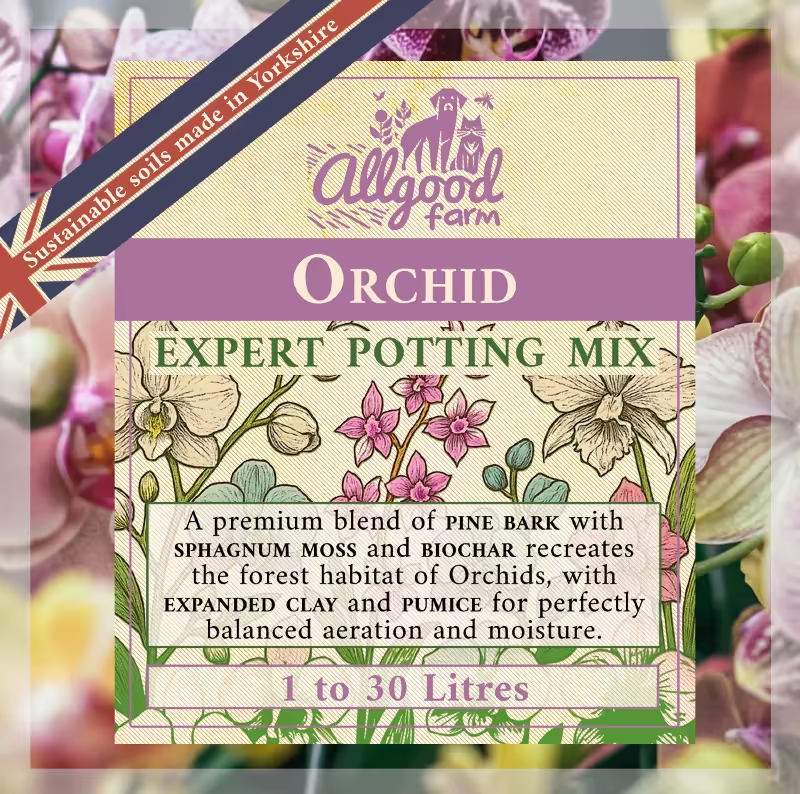
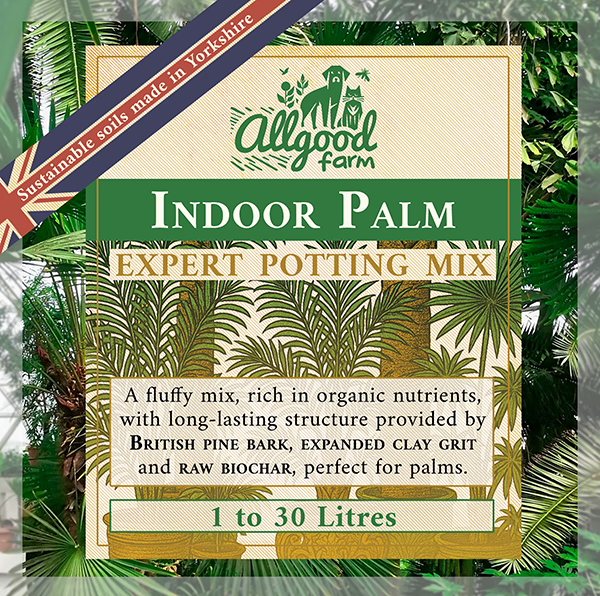
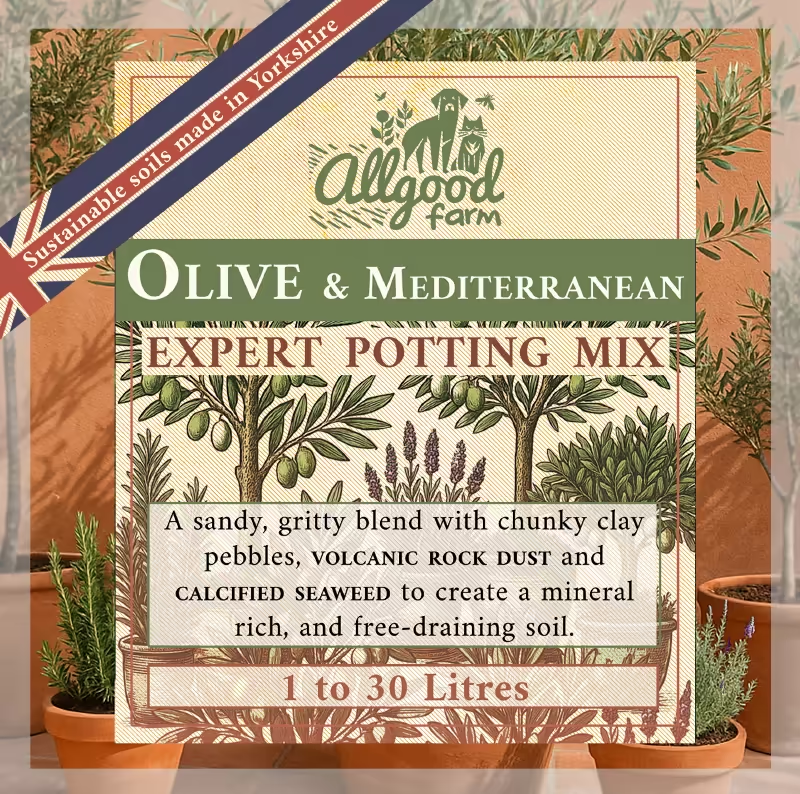
Choose a soil mix made for your houseplant
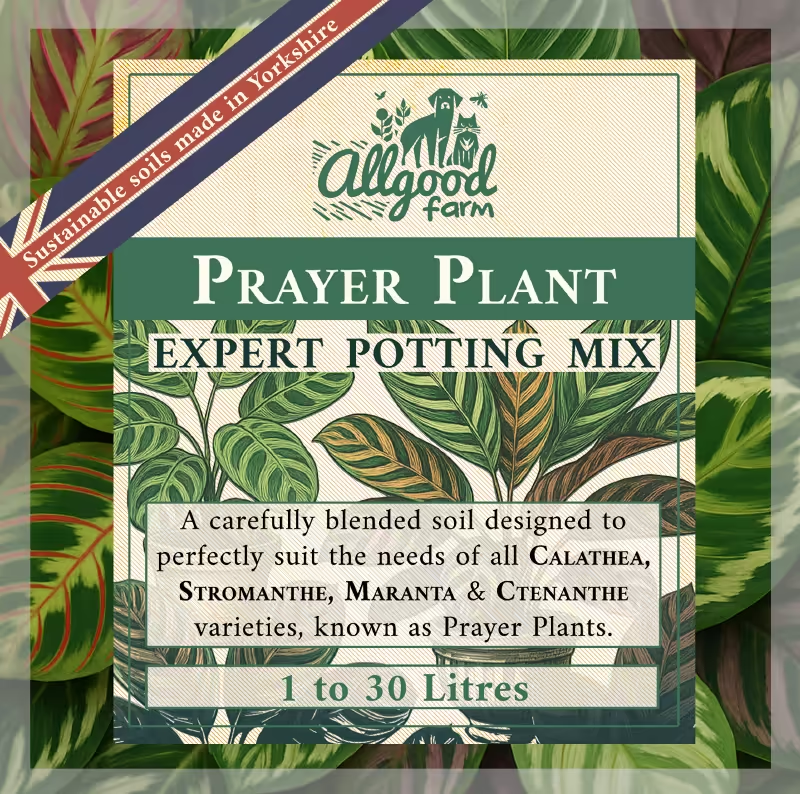
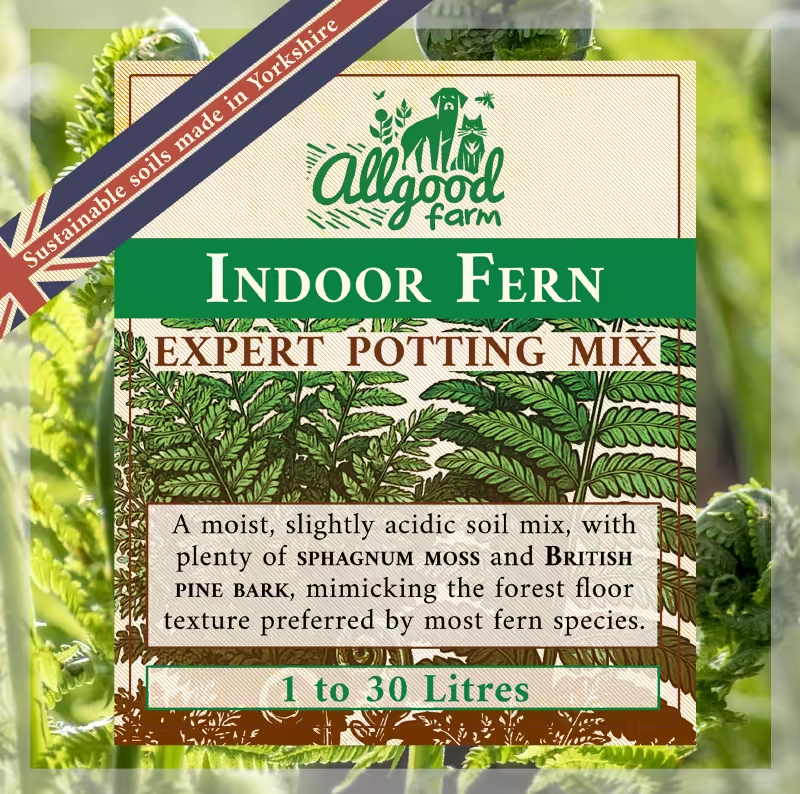
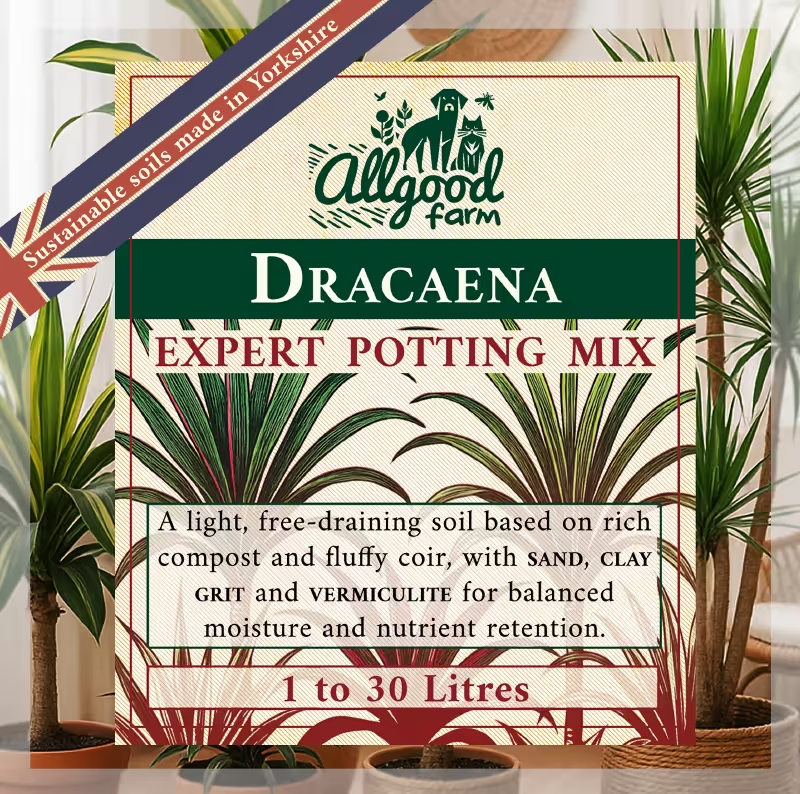
Explore our specialist houseplant soil mixes and find a growing medium suited to the plant you’re potting or repotting.
At a glance
Why does potting soil go mouldy?
Fungi need moisture
Damp conditions give fungal spores an opportunity to grow on organic material in the pot.
Check the conditions
Persistent mould is a good reason to look at watering, drainage, airflow and the condition of the mix.
Look beyond the surface
A healthy plant with a little surface mould is very different from one sitting in saturated, deteriorating soil.
Continue learning
Coming next
How to Store Leftover Potting Soil
Another guide in our potting soil series.
More from Allgood Farm
Follow us for more houseplant tips
Join Allgood Farm on Facebook for houseplant tips, new guides and more from us.

Leave a Reply