
Potting soil and compost can look remarkably similar when they’re sitting in a bag. They’re both dark, earthy growing materials, both can contain organic matter and both might end up around the roots of your plants. So are they really different?
Yes — although the terminology can make things confusing. Compost can be an ingredient in a potting mix, while products sold as compost can also be complete growing media in their own right. Understanding what you’re actually buying makes it much easier to choose something suitable for your houseplants.
Quick answer
Potting soil vs compost: what’s the difference?
Compost is organic material that has decomposed, while potting soil or potting mix is a growing medium designed to support plants in containers. A potting mix can contain compost, but it may also contain ingredients such as coir, bark, perlite or other materials that change its drainage, moisture retention and structure. In the UK, the word “compost” is also commonly used for packaged growing media, which is why the distinction isn’t always obvious.
What is potting soil?
Potting soil is the material used to grow plants in pots and other containers. Despite the name, it doesn’t necessarily contain ordinary garden soil at all.
A potting mix can combine several ingredients, each doing a different job. Some hold moisture, some provide organic matter and others create larger spaces within the mixture so water can drain and air can reach the roots.
The exact recipe varies enormously. A fine, moisture-retentive mix might suit one plant perfectly, while a plant that prefers rapid drainage may do better in something much chunkier.
That’s why you’ll find both general-purpose potting mixes and specialist mixtures intended for particular groups of plants.

What is compost?
In its simplest sense, compost is organic material that has broken down over time. Garden compost made from plant material is an obvious example.
However, things become less straightforward when you’re standing in a garden centre.
In the UK, manufacturers commonly use the word “compost” for packaged growing media. Multipurpose compost, houseplant compost and seed compost aren’t simply piles of decomposed garden waste. They’re products formulated for growing plants and can contain a mixture of different ingredients.
So when comparing potting soil vs compost, the label alone doesn’t always tell you exactly what you’re dealing with. The ingredients and characteristics of the product matter more.
Compost
At its simplest, decomposed organic material. The term is also widely used for packaged growing media in the UK.
Potting soil
A growing medium intended for plants in containers. It can contain several ingredients chosen for different purposes.
Potting mix
Often used interchangeably with potting soil, particularly for mixtures that don’t contain actual garden soil.
Does potting soil contain compost?
It can, but it doesn’t have to.
Compost is one possible component of a potting mix. Other ingredients can provide similar or completely different functions.
For example, a mixture might include coir to help retain moisture, bark to create structure and perlite to help keep the medium open. Different manufacturers and different plant-specific mixes use different combinations.
Rather than assuming that all potting soil contains compost, check the ingredients of the particular product you’re using.
Good to know
“Soil”, “potting mix” and “compost” aren’t always used consistently on packaging. If you’re choosing a growing medium for a particular houseplant, its ingredients and physical structure tell you more than the product name alone.
Can you use compost instead of potting soil?
Sometimes, depending on what you mean by compost.
If you’re talking about a commercially prepared multipurpose compost intended for growing plants in containers, it may work perfectly well for many plants.
If you’re talking about homemade garden compost, that’s a different material. Its composition can vary considerably, and it may contain undecomposed material, seeds and organisms from the garden.
There is also the question of structure. A growing medium can contain plenty of useful organic matter and still be too dense or moisture-retentive for a particular houseplant.
So the better question is: does this material provide the conditions this plant needs around its roots?
Is potting soil better than compost for houseplants?
Neither is automatically better. It depends on the product and the plant.
Houseplants grow in containers, which creates a very different root environment from growing directly in the ground. There is only a limited volume of material around the roots, and excess water can’t simply disperse into the surrounding earth.
That makes moisture retention, drainage and aeration particularly important.
A suitable potting mix gives you an opportunity to balance those characteristics. For that reason, a growing medium designed for containers — and ideally for the type of plant you’re growing — is often more useful than choosing something simply because it contains lots of compost.
Think beyond nutrients
Roots need air as well as water and nutrients.
A rich growing medium isn’t necessarily the right one if its structure keeps the roots wetter or less aerated than the plant prefers.
Why does the structure of potting soil matter?
Look closely at different potting mixes and you’ll notice that some are much chunkier than others.
Those larger pieces aren’t necessarily filler. Ingredients such as bark, perlite and expanded clay can affect the physical structure of the mixture and create spaces between finer particles.
This influences how water and air move through the pot.
A very fine mix may retain more moisture and settle more densely. A chunky mixture generally contains larger gaps and behaves differently when you water it.
Neither texture is universally right or wrong. What matters is matching the growing medium to the plant.
Do different houseplants need different potting soil?
Yes. Houseplants don’t all grow in the same conditions in nature, so it makes little sense to assume their roots all want exactly the same environment in our homes.
A tropical aroid such as a Monstera has different requirements from a cactus or succulent. Likewise, a plant that appreciates consistent moisture may not enjoy the same mixture as one whose roots need to dry more readily between waterings.
You don’t necessarily need a completely different bag for every individual plant. However, understanding the characteristics a plant prefers can help you decide whether a general-purpose growing medium is suitable or needs adjusting.
Check 1
The plant
Find out whether its roots generally prefer consistent moisture or a more freely draining environment.
Check 2
The texture
Look at whether the growing medium is predominantly fine or contains larger ingredients that create structure.
Check 3
The ingredients
Check what’s actually in the bag rather than relying entirely on words such as soil or compost on the front.
Can you mix potting soil with compost?
Yes. In fact, the two don’t have to be competing choices.
You can use compost as one component of a potting mixture, provided the finished mix has suitable properties for the plant you’re growing.
However, adding compost changes the mixture. It may alter its nutrient content, moisture retention and physical structure. More compost isn’t automatically an improvement.
We’ve looked at this in detail in our guide to mixing potting soil with compost, including what to consider before combining the two.
What if your compost is too fine for your houseplant?
You can change the structure rather than throwing it away.
Adding chunkier materials can turn a fine growing medium into a more open mixture. This is particularly useful when you’re growing plants that prefer plenty of air around their roots.
For example, bark and perlite introduce larger particles, while other amendments can contribute their own properties to the finished mix.
That’s also why looking at the contents of a potting mix is more informative than simply asking whether it’s soil or compost.

What should you use when repotting a houseplant?
Start with the plant rather than the bag.
Think about how its roots prefer to grow, then choose a medium with appropriate moisture retention, drainage and structure.
If you’re using a ready-made specialist potting mix, you may not need to add anything at all. If you’re starting with a general-purpose compost, you might decide to alter it with other ingredients to create a more suitable texture.
Whichever approach you take, don’t forget the pot itself. A suitable growing medium still needs somewhere for excess water to escape.
If you’re getting ready to move a plant into a new pot, our step-by-step guide to repotting houseplants covers the whole process.
Can you use garden soil instead?
Ordinary soil dug from the garden is another thing altogether.
It has developed as part of an outdoor ecosystem and can behave very differently when confined inside a pot. Depending on the soil, it may become dense, compacted or slow to drain in a container.
It can also bring weeds and outdoor organisms indoors with it.
That’s one reason commercial potting mixes often don’t contain conventional garden soil despite being called “potting soil”. They’re built from ingredients chosen to behave predictably in containers.
How do you choose between potting soil and compost?
Ignore the idea that one is always better than the other. Instead, work out what you’re actually buying and whether it suits the job.
Before you fill the pot, check:
Can old potting soil or compost still be used?
Age alone doesn’t necessarily make a growing medium unusable.
However, its condition can change. Previously used potting soil may become compacted, lose some of its original structure or contain old roots. An opened bag can also be affected by the way it has been stored.
If you’re deciding what to do with something you already have, our guides to reusing potting soil and how long potting soil lasts will help you assess it before putting another plant in it.
Choose a complete potting mix
You want a ready-to-use growing medium with its ingredients already combined for container growing.
Build or adjust your own
You already have compost or another base medium and want to alter its structure to better suit your plant.
So, what’s the difference between potting soil and compost?
The simplest distinction is that compost describes decomposed organic material, while potting soil or potting mix describes a growing medium intended for plants in containers.
In practice, the language on bags isn’t always that tidy. A product labelled compost may be a complete growing medium, while a potting mix may contain compost alongside several other ingredients.
That’s why the best choice isn’t determined by which word appears on the packaging. Look at what’s actually in the mixture, how it behaves and what your plant needs around its roots.
Ready to repot?
Find the right mix for your houseplant
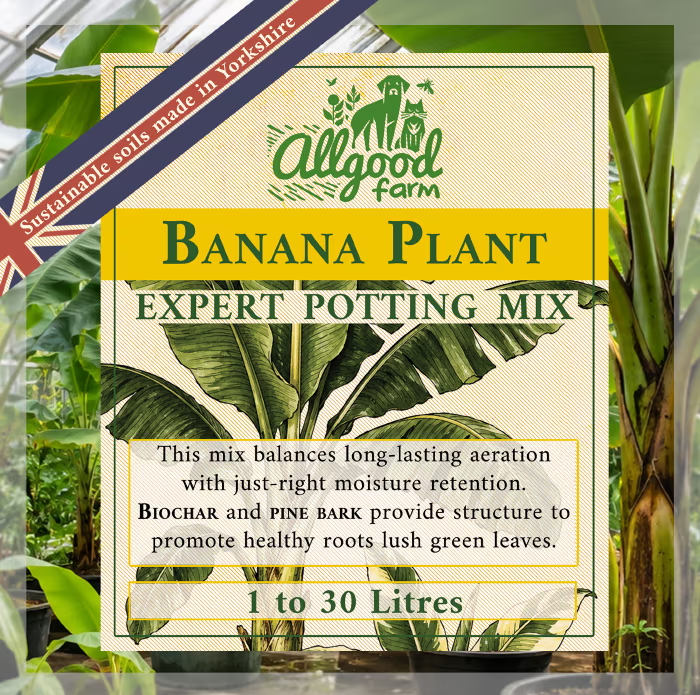
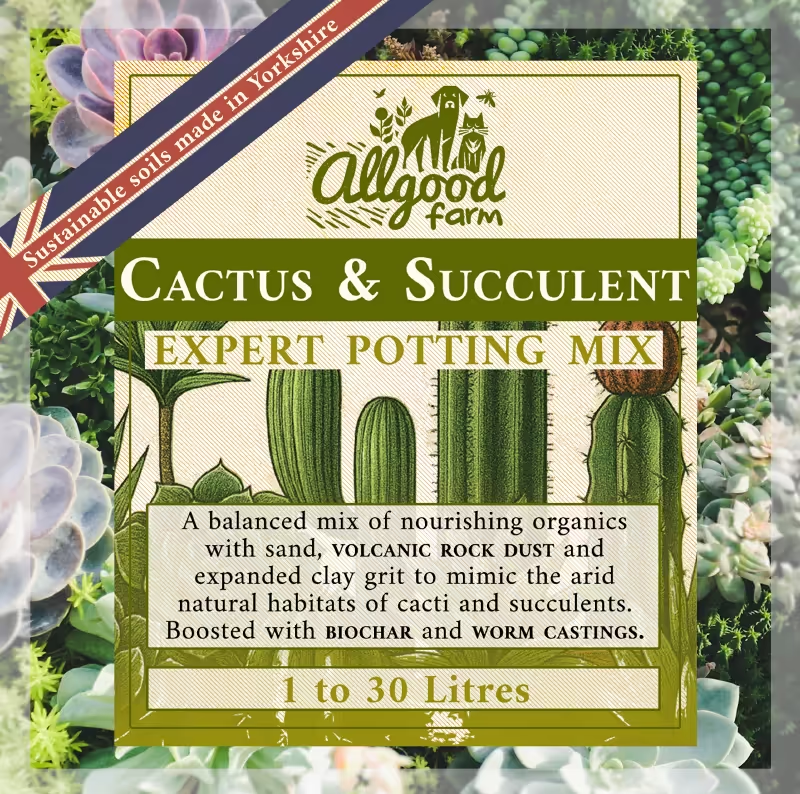
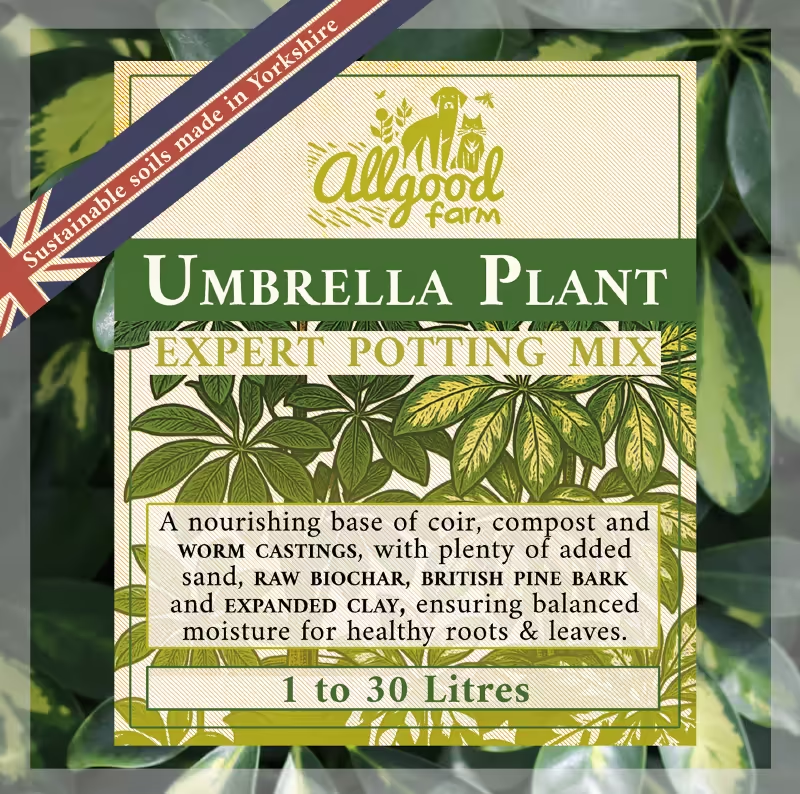
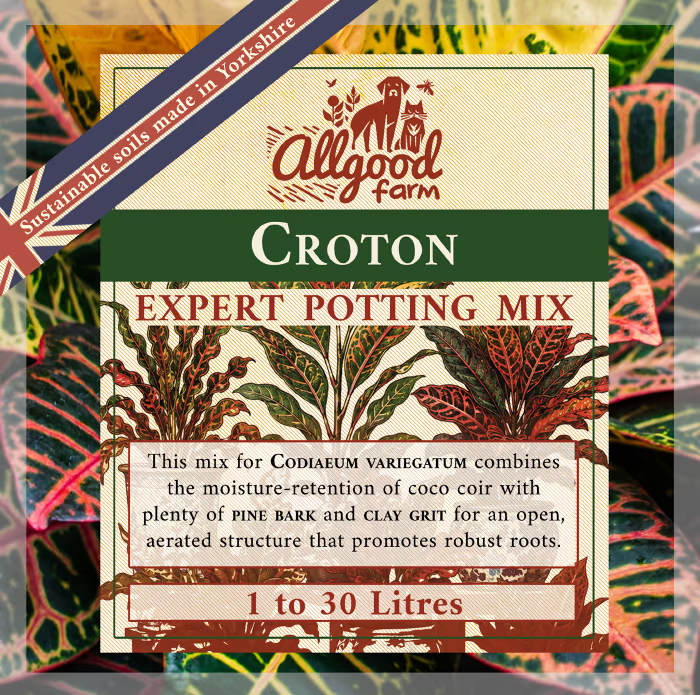
Different roots need different conditions. Explore our specialist houseplant soil mixes designed around the needs of the plants you’re growing.
At a glance
Potting soil vs compost
They’re not quite the same
Compost is decomposed organic material. Potting mix is a growing medium that can contain several different ingredients.
Labels can be confusing
In the UK, products labelled compost are often complete growing media designed for plants.
Choose for the roots
The right moisture retention, drainage and structure for your plant matter more than the name on the bag.
Continue learning
More from Allgood Farm
Follow us for more houseplant tips
Join Allgood Farm on Facebook for houseplant tips, new guides and more from us.




Leave a Reply